
Master AEO Strategy: What is AEO for Businesses in 2026?
Answer Engine Optimization (AEO): what it is — and why your business needs it in 2026
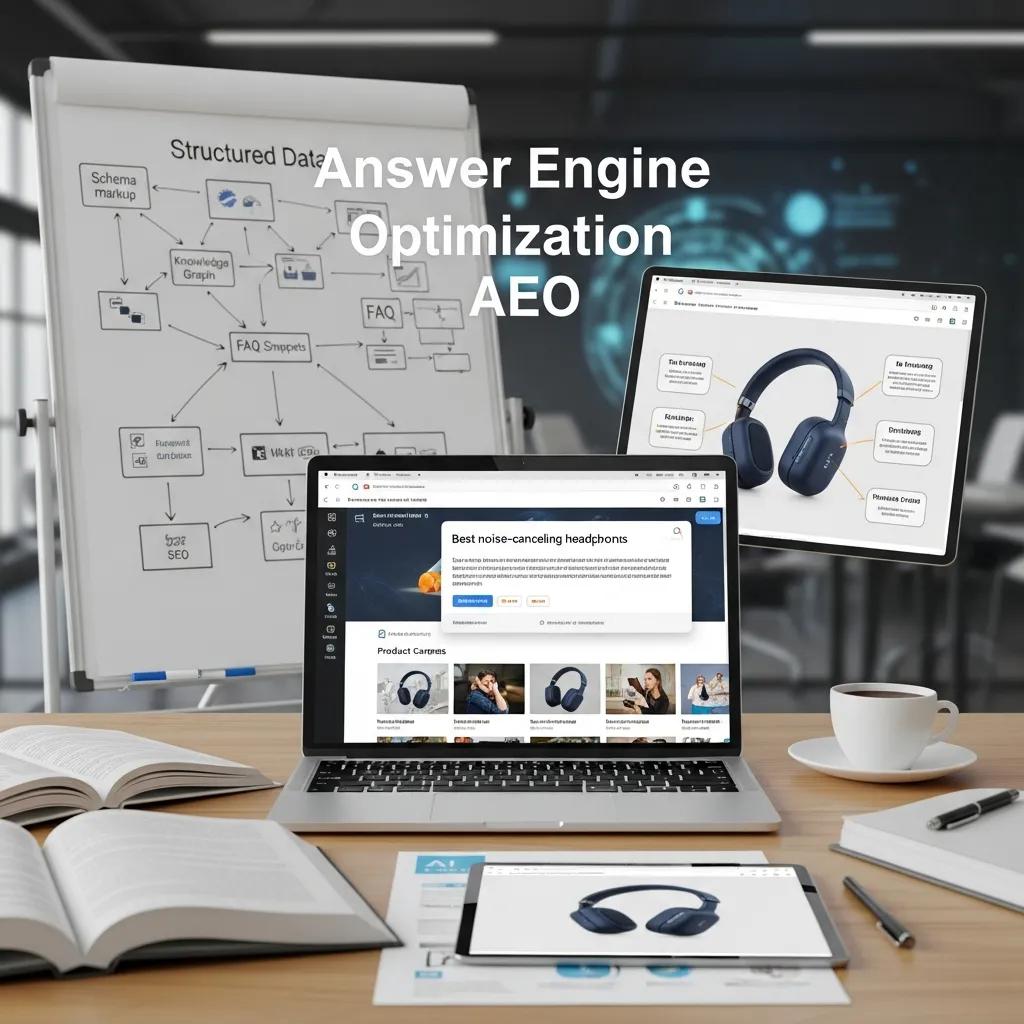
Answer Engine Optimization (AEO) means organizing your content, data, and creative assets so AI-powered search systems surface your brand’s answers, citations, and visual references — rather than only traditional ranked links. This guide explains what AEO looks like in practice, how AI Overviews and zero-click formats choose sources, and why e-commerce and service brands should start AEO work now to protect discoverability and conversions heading into 2026. You’ll get a straightforward look at the AEO flow (retrieval → candidate selection → generation → citation), the tactical levers to pull (structured data, clear entity names, visuals, concise answer copy), and how to measure AI citation rate and featured-answer presence. We also outline practical steps for product listings, A+ modules, and schema cleanup — and show how Listing Studios’ services (Listing Labs, trust-building visuals, and Clarity Calls) help small teams implement AEO without losing focus on conversion outcomes.
What is Answer Engine Optimization?
Answer Engine Optimization prepares your pages and machine-readable signals so language models and AI search agents pick and cite your content as authoritative answers. Modern AI search mixes document retrieval with generative models that prefer concise, entity-rich, well-structured sources — which is why AEO works. When you optimize for AEO, product pages and support docs are more likely to be quoted inside Google AI Overviews, chat assistants, and other LLM-driven experiences, preserving visibility even as clicks decline. The practical shift is from chasing rank to becoming the accepted answer for defined user intents — which usually brings better referrals, increased brand mentions, and higher-quality conversions.
AEO succeeds when a few core elements are in place:
- Short, direct answer copy that matches conversational queries.
- Structured data and schema that expose entity attributes in machine-readable form.
- Trust signals — verified reviews, consistent brand assets, and high-quality visuals.
These elements shape how AI systems choose answers. The next section walks through the retrieval-to-generation pipeline in plain language.
How does AEO work with AI-powered search tools?
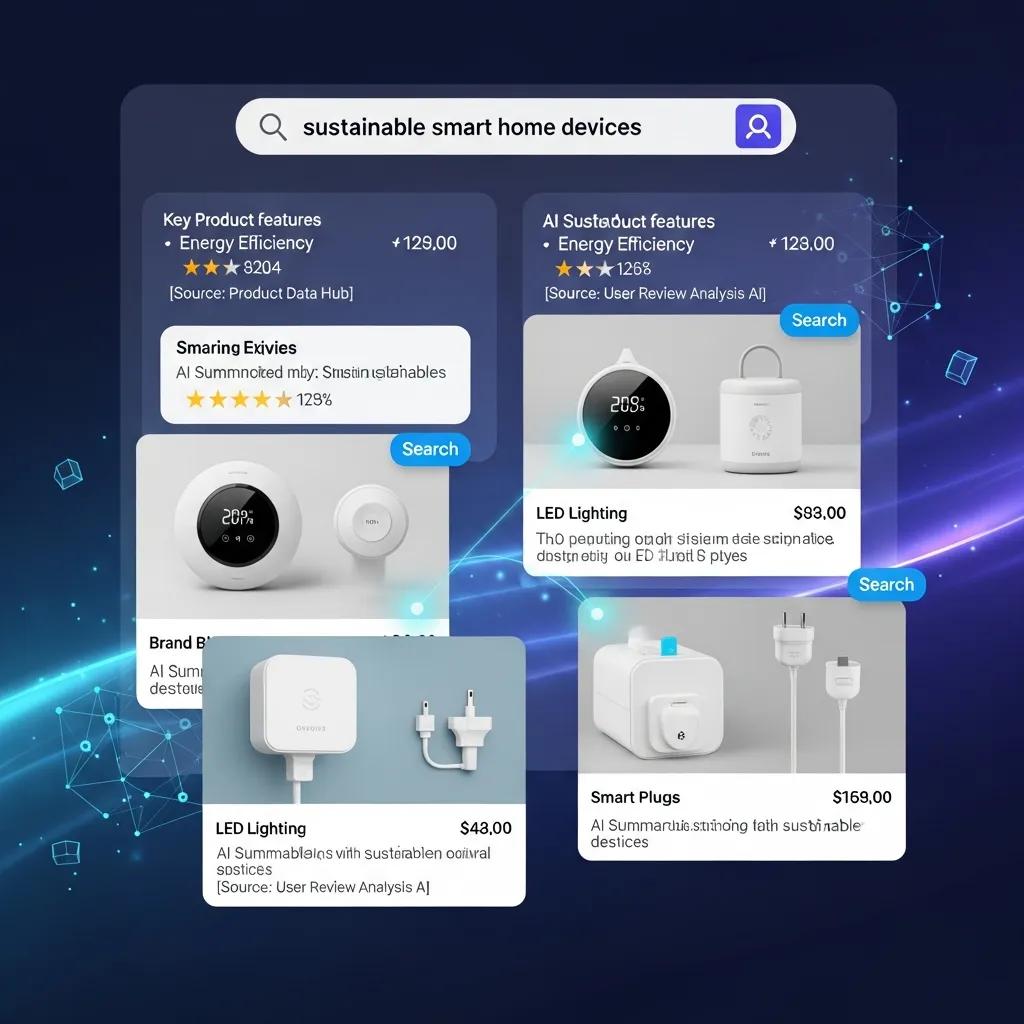
AEO aligns your content to a common AI search flow: query parsing → retrieval of candidate documents → candidate ranking → LLM generation of a final answer with citations. Retrieval favors documents with explicit entity signals and structured data; ranking weighs authority, freshness, and signal richness; and the generation step synthesizes a concise response, often quoting or citing sources. Structured types like Product, Offer, and FAQ — plus explicit spec lists — feed retrieval scores directly, while visuals (product photos, infographics) act as supporting trust evidence. For example, Product schema that includes precise dimensions, materials, and aggregateRating makes a listing far more likely to be cited when a user asks about specs. Understanding this flow helps teams prioritize earlier-stage signals — structured data and authoritative content — instead of trying to game ranking alone.
What are the key components of an effective AEO strategy?
Effective AEO rests on a few interlocking pillars: concise answer content, entity and schema clarity, authority signals, and technical readiness for AI retrieval.
Concise answer content means turning product bullets and help docs into short Q&A blocks and spec lists that map to likely user questions.
Entity optimization covers canonical names, consistent identifiers, and cross‑page linking so brand and product mentions resolve into a coherent knowledge graph.
Schema and structured data expose attributes directly to retrieval systems, while authority signals — reviews, high-res visuals, and verified product content — improve citation odds.
Technical readiness includes crawlability, page speed, and accurate JSON‑LD. Together these pillars reduce ambiguity for retrieval engines and increase the chance an AI generator will select and cite your content. Practical e-commerce examples follow in the next sections.
Why is AEO essential for businesses in 2026?
Search in 2026 is shifting from click-focused ranking to answer-first experiences where zero-click results and AI Overviews often satisfy intent without a page visit. As generative summaries and assistant responses spread across platforms like Google AI Overviews, Perplexity, and embedded assistants, brands that provide clear, verifiable answers get cited more frequently. The business impact is tangible: protected visibility when organic clicks fall, more branded referrals from citations, and stronger buyer confidence when product specs and images appear directly in AI responses. Early AEO work also builds durable authority signals — consistent schema, knowledge graph entries, and dependable content — that compound as AI systems learn which sources reliably answer queries.If you're a Seattle-area business, see how we approach Seattle SEO and AI visibility specifically.
Main business benefits include:
- Higher chance of being cited in AI Overviews, protecting visibility in zero-click contexts.
- Better conversions from trusted citations that surface verified specs and visuals.
- A competitive edge from clear entity signals and consistent schema coverage.
Next, we’ll cover how zero-click formats concretely affect traffic and discovery.
How do zero-click searches and AI Overviews impact online visibility?
Zero-click searches happen when users get full answers on the search page or inside assistant responses, which reduces click-through to individual pages. AI Overviews amplify this: generative responses often synthesize multiple sources and provide a short, authoritative answer with direct citations — so the cited brand gains exposure even if the user doesn’t click. For businesses, value shifts from raw organic traffic to measurable citation outcomes and downstream conversions, like branded-search lifts or direct visits. Practically, teams should monitor zero-click impression trends, identify pages that get cited by AI Overviews, and optimize those pages for clarity and citation readiness so visibility converts into leads or revenue.
What advantages does AEO provide for e-commerce brands?
On marketplaces and storefronts like Amazon and Shopify, AEO improves product discovery inside AI-driven shopping experiences and raises the chance that specs, visuals, and A+ content are used as authoritative answers. When an AI overview quotes your spec list or shows your A+ images, shoppers get richer context and more confidence without extra friction. High-quality visuals and structured descriptions reduce buyer uncertainty and increase click‑through and conversion for visitors who do click. Quick wins include adding conversational Q&A to listings and ensuring A+ modules have clear spec summaries and image captions that an AI can parse and cite.
Short-term gains are straightforward: better placement in AI citations, stronger trust from visible product details, and a clearer path from mention to purchase intent. The next section outlines practical tactics to get started.
How does AEO differ from traditional SEO?
AEO differs from traditional SEO in goals, signals, and measurement. Traditional SEO optimizes for ranked positions on SERPs using backlinks, keyword relevance, and on-page authority to drive clicks. AEO optimizes to be the selected answer: it prioritizes concise answer copy, entity clarity, and machine-readable structured data so AI systems cite the source. Measurement shifts from rank and organic clicks to AI Citation Rate, featured-answer presence, and zero-click impressions tied to your entities. They’re complementary approaches, but AEO asks teams to reformat content into answer-ready fragments and add explicit schema that traditional SEO often overlooks.
Here’s a compact comparison to highlight the practical differences:
| Approach | Primary Goal | Key Signals | Typical Outputs |
|---|---|---|---|
| AEO | Be the cited answer in AI Overviews | Structured data, entity clarity, concise answers, visuals | Citations, AI Overviews, zero-click visibility |
| SEO | Rank in organic listings for queries | Backlinks, keyword relevance, page authority | SERP ranking, organic clicks, traffic |
| Combined | Maximize both clicks and citations | Mix of both signal sets | Balanced visibility across SERP and AI answers |
What are the main differences between AEO and SEO?
The differences show up in tradeoffs and measurement. AEO favors brevity and explicit attribute exposure so generative engines can quote and cite, while SEO often values longer-form content to build topical authority. Metrics differ: AEO focuses on AI Citation Rate and featured-answer share; SEO tracks rankings and organic CTR. Implementation diverges too — AEO leans heavily on schema and entity linking, while SEO still relies on backlinks and content depth. In practice, content teams should publish both answer-ready snippets and long-form resources, linking concise answers to deeper pages for users who want more detail.
How can businesses integrate AEO with existing SEO strategies?
Adding AEO into current SEO workflows is practical and incremental: (1) audit and add schema on high-value pages, (2) convert key sections into concise Q&A and spec lists, and (3) adopt an editorial template that produces short answer snippets plus linked long-form content. Start with a schema audit to find pages missing Product, Offer, or FAQ markup; prioritize JSON‑LD for pages that already rank or get branded traffic. Then add short-answer blocks (40–120 words) targeting conversational queries and place them near the top so retrieval systems can extract them. Finally, train your SEO and editorial teams on entity-driven naming conventions and a checklist for metadata and image captions. For most teams this becomes a sprint-based workflow that delivers measurable AI-citation gains without a full content overhaul.
What practical AEO strategies can e-commerce businesses implement?
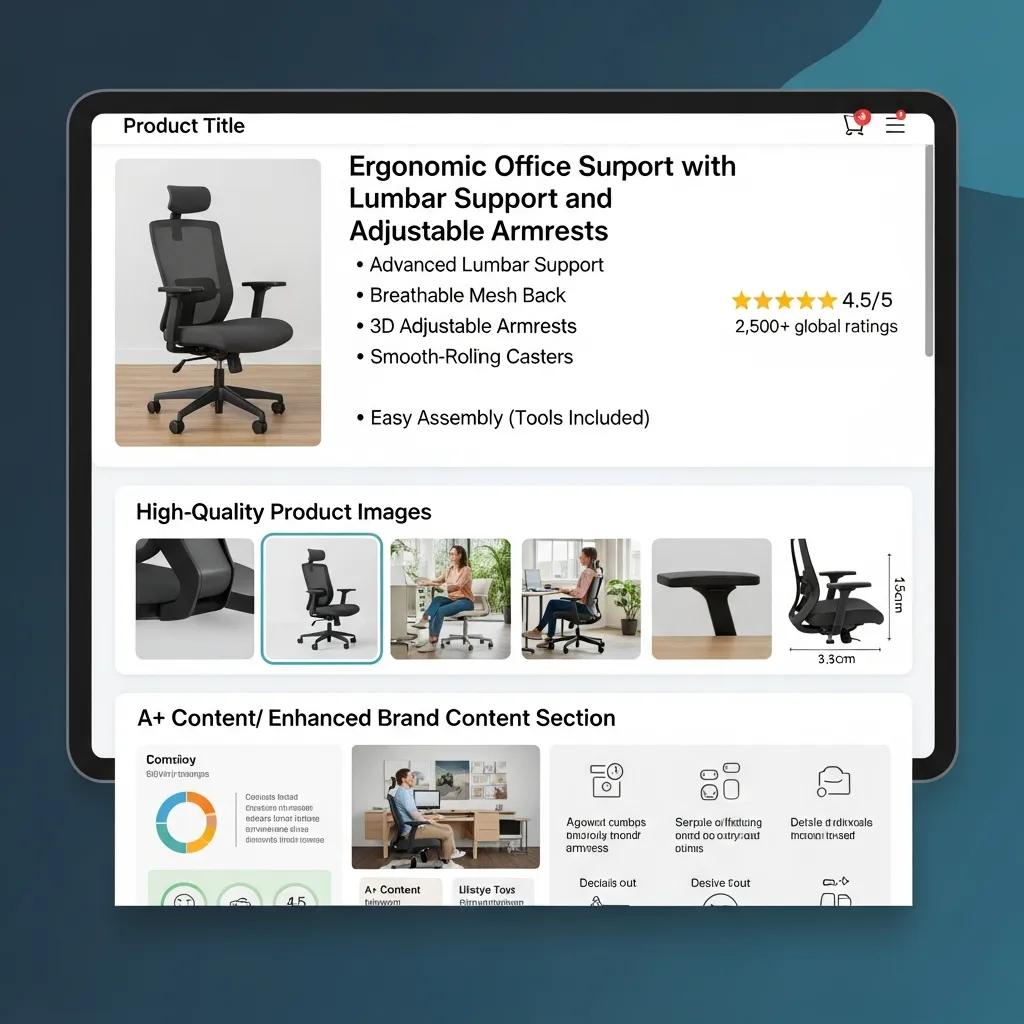
E-commerce teams can adopt focused AEO tactics that improve the chance of being selected and cited by AI systems. Turn product pages into modular, machine-friendly blocks: title templates with canonical entity names, short spec lists, conversational Q&A, and captioned images. Implement Product, Offer, and AggregateRating schema for every active SKU, and ensure image filenames and ALT text include clear entity descriptors and key attributes. For A+ content, provide concise module summaries an AI can extract and labeled spec tables instead of long narrative-only copy. These steps prioritize what retrieval systems value most — clarity, structure, and verifiable attributes — so listings become both discoverable and citable.
The table below compares common listing elements and how to optimize each for AI citation:
| Listing Element | Optimization Tactic | Effect on AI Citation |
|---|---|---|
| Title | Use a canonical name + a primary attribute (size, material) | Boosts exact-match retrieval chances |
| Bullets | Short spec bullets and practical use-cases | Provides extractable facts for answers |
| Description/A+ | Include Q&A blocks and labeled spec tables | Supplies concise answer fragments AI can use |
| Images | Descriptive filenames, ALT text, and captions | Adds visual verification and trust signals |
How to optimize product listings and A+ content for AI search?
Follow this focused 6-step process to make product pages answer-ready:
- Create a canonical title template that includes brand, model, and a key attribute written naturally.
- Turn long narrative descriptions into a short spec table plus a 1–2 sentence summary answer at the top.
- Add a concise Q&A block (3–5 questions) for likely conversational queries and expose it with FAQ schema.
- Rewrite bullets as machine-extractable facts — under 20 words each and focused on user intent.
- Optimize image metadata: descriptive ALT text, captions, and filenames that include entity descriptors.
- Validate JSON‑LD for Product, Offer, AggregateRating, and ImageObject and fix schema errors before publishing.
What role does structured data play in e-commerce AEO success?
Structured data provides machine-readable facts that feed retrieval and ranking systems directly, making it one of the highest-impact AEO tactics for e-commerce. Key schemas include Product (name, description, sku), Offer (price, availability), AggregateRating (review counts and scores), ImageObject (caption/source), and FAQ or HowTo where relevant. Accurate property values (exact price, currency, availability flags) signal trustworthiness and reduce ambiguity during candidate selection. Common pitfalls are missing required properties, mismatches between visible text and JSON‑LD, and duplicate or stale schema across variants. Implementing structured data correctly raises the chance an AI will select your page as a primary citation for product-specific queries.
Set a validation cadence — lint JSON‑LD in staging and re-check after publishing — to avoid schema drift as product data changes.
How can businesses measure and monitor their AEO performance?
Measuring AEO means extending standard analytics with AEO-specific KPIs and a regular audit cadence focused on citation presence and content freshness. Primary KPIs include AI Citation Rate (share of AI Overviews or assistant responses that cite your assets), featured-answer captures, zero-click impression share, and voice-search engagement. Pair these with conversion metrics tied to cited pages — branded-search lifts, direct sessions after AI mentions, and assisted conversions. Regular audits should include schema validation, manual sampling of AI Overviews for citation accuracy, and automated alerts for schema errors. A mix of qualitative audits and quantitative KPI tracking gives a clear view of AEO’s impact on visibility and revenue.
The table below lists key KPIs and tools for interpreting AEO performance.
| KPI or Tool | What it Measures | How to Interpret for AEO |
|---|---|---|
| AI Citation Rate | Share of AI responses citing your domains/pages | Higher rate = greater answer authority |
| Featured-Answer Capture | Instances where your content is the primary answer | Tracks direct wins in answer positions |
| Search Console (GSC) | Impressions, queries, and page performance | Use for zero-click trends and intent shifts |
| Schema Validator | JSON‑LD correctness and errors | Errors reduce citation likelihood and must be fixed |
Which metrics indicate successful AI search optimization?
Successful AEO shows up as rising AI Citation Rate, more featured-answer captures, steady or improved conversions from cited pages, and an uptick in branded searches after AI mentions. AI Citation Rate = (AI citations referencing your pages) / (total observed AI Overviews for target queries) × 100. Benchmarks vary by vertical, but movement in this rate combined with conversion gains is the strongest sign of AEO ROI. Also monitor zero-click impression trends in Search Console and voice-search sessions in analytics to detect shifts toward non-click discovery. To interpret these signals, link citation events to downstream outcomes like revenue, lead quality, or time-to-purchase.
What tools help track and audit AEO effectiveness?
AEO monitoring blends standard SEO tools with targeted audits and manual sampling. Useful tools include Search Console for impressions and query data, GA4 for conversion paths, schema validators for JSON‑LD checks, and hands-on AI sampling (queries in ChatGPT, Gemini, or other assistants) to observe citation behavior. Set automated alerts for schema errors and large drops in cited pages, and schedule a biweekly manual audit to sample AI Overviews for accuracy and citation context. This combined approach — automated alerts plus human review — catches what automation misses and surfaces opportunities to expand answer-ready content.
How can Listing Studios support your AEO journey in 2026?
Listing Studios helps e-commerce teams execute the practical work of AEO: audits, schema implementation, content mapping, and trust-building visuals. Our SEO and AI visibility services — AI & Search Discoverability, product photography and infographics, and Listing Labs workshops — match the AEO pillars above. For teams that need execution, we build spec tables, turn product bullets into answer-ready blocks, validate JSON‑LD, and produce visuals that strengthen citation trust. Our goal is to accelerate AEO adoption while fitting into your existing workflows, not replacing them.
Key services that support AEO priorities:
- AI & Search Discoverability: audits, schema implementation, and content mapping to create citation-ready assets.
- Trust-Building Visuals: product photography, infographics, and product video that strengthen the evidence AI systems use.
- Business Clarity & Direction (Listing Labs): hands-on workshops, templates, and checklists to train teams on consistent AEO workflows.
What is Listing Labs and how does it help with AEO?
Listing Labs is a hands-on workshop series that delivers practical modules — audits, schema implementation, content templates, and editorial checklists — so teams can produce AEO-ready assets consistently. Modules cover topic mapping for AI queries, structured-data best practices, product photography briefs optimized for machine-readable captions, and A+ content templates that balance narrative with extractable facts. Participants leave with templates and implementation guides so small teams and in-house SEOs can adopt repeatable AEO workflows without rearchitecting their operations. Listing Labs emphasizes speed and repeatability: teach, provide templates, and create processes to keep content fresh and citation-friendly.
The training targets product teams and in-house SEO staff who want step-by-step, practical sessions rather than abstract theory.
How to book a Clarity Call for personalized AEO guidance?
A Clarity Call with Listing Studios is a focused session to assess your AEO readiness, prioritize implementation sprints, and outline measurable next steps for your catalog or service pages. Before the call, gather examples of priority product pages, current schema snippets, and top-performing queries or pages from Search Console. On the call you’ll get a quick audit, prioritized recommendations, and a roadmap for quick wins and longer-term work. Booking a Clarity Call is the fastest way for teams to get tactical, outcome-focused guidance from a partner who specializes in AI-driven discoverability and trust-building visuals.
Bring representative URLs, current performance metrics, and a short list of business goals to make the session actionable and leave with concrete next steps from Tina and the Listing Studios team.
Book your free strategy call and find out exactly where your business stands in AI search.
Frequently Asked Questions
What types of content are best suited for AEO optimization?
Short, structured content that directly answers user questions works best for AEO. Think product descriptions broken into spec tables, FAQs, and concise support articles that can be parsed easily by machines. Adding schema markup to these pages also increases their chance of being cited in AI-driven results. Focus on intent-first answers and machine-readable formats to improve discoverability and engagement.
How can businesses keep their AEO strategies up to date?
Keep AEO effective with regular audits of content and structured data. Update product info, check schema accuracy, and monitor shifts in user behavior and search trends. A content calendar with scheduled reviews helps keep assets current. Also stay informed about AI developments so you can adapt templates and schema as platforms evolve.
What specific metrics should businesses track for AEO performance?
Track AI Citation Rate (how often AI responses cite your content), featured-answer captures, and zero-click impression share. Tie those metrics to conversion signals like branded-search lifts, direct sessions, and assisted conversions. Together they show whether citations drive real business outcomes.
How does AEO influence customer trust and engagement?
AEO builds trust by making accurate, concise, and verifiable information easy to find in AI responses. When users see reliable specs, images, and reviews directly in an AI overview, they’re more likely to trust the brand and convert. Structured data and consistent visuals reinforce that trust.
What challenges might businesses face when implementing AEO?
Common challenges include limited understanding of schema, the effort required to produce concise answer-ready content across large catalogs, and the ongoing work to keep data fresh. Regular audits and clear processes help, and many teams find value in outside help or tooling to scale implementation.
How can businesses leverage AI tools to enhance their AEO efforts?
Use AI tools to analyze user queries, surface common questions, and help generate structured content drafts. AI can also assist with schema generation and performance analysis (AI Citation Rate, zero-click trends). Combine automated insights with human review to keep answers accurate and on-brand.
What types of businesses can benefit from Answer Engine Optimization?
AEO benefits many organizations, especially e-commerce brands, service providers, and content-driven sites. Any business that relies on online discoverability and customer trust can gain from making its content easier for AI systems to recognize and cite. Learn more about our AI visibility services for service-based businesses.
How can businesses ensure their content is AEO-ready?
Make content AEO-ready by writing concise answers to likely questions, adding schema and structured data, optimizing visuals with descriptive captions, and running routine audits to keep everything accurate. These steps help AI systems find and trust your content when generating answers.
What role does user intent play in AEO?
User intent is central: AEO delivers short answers that match what people actually want. Recognize whether queries are informational, navigational, or transactional, and craft answers that satisfy those intents so AI systems select your content as the authoritative source.
How does AEO impact traditional SEO practices?
AEO complements SEO by shifting some emphasis from ranking positions to being the cited answer in AI-driven results. While SEO still needs backlinks and content depth, AEO requires concise, structured snippets and precise schema. The best programs combine both approaches.
What are some common mistakes to avoid when implementing AEO?
Avoid skipping structured data, ignoring user intent, and publishing overly long or ambiguous copy that’s hard for AI to extract. Also watch for mismatches between visible content and JSON‑LD and keep a validation cadence to prevent schema drift.
How can businesses measure the success of their AEO efforts?
Measure AEO with KPIs like AI Citation Rate, featured-answer captures, and zero-click impression share, and connect those to conversion metrics on cited pages (branded-search lifts, direct sessions, assisted conversions). Regular schema checks and manual sampling of AI Overviews validate citation behavior and accuracy so you can refine your approach.
What future trends should businesses watch for in AEO?
Watch rising voice search and conversational AI, which favor natural language and short, clear answers. Expect deeper citation mechanisms as platforms integrate AI further — keep structured data, entity consistency, and answer-ready content current to stay visible and credible.